How to Choose Scrap Gold Calculator
How to choose scrap gold calculator tools by purity inputs, gram/DWT/troy-oz units, and honest melt limits so your estimate matches real shop-bench math.

You weigh a tray of broken chains, punch the weight into a scrap gold calculator, and the number looks fine—until the buyer’s ticket comes back thirty percent lower and nobody can explain which input failed.
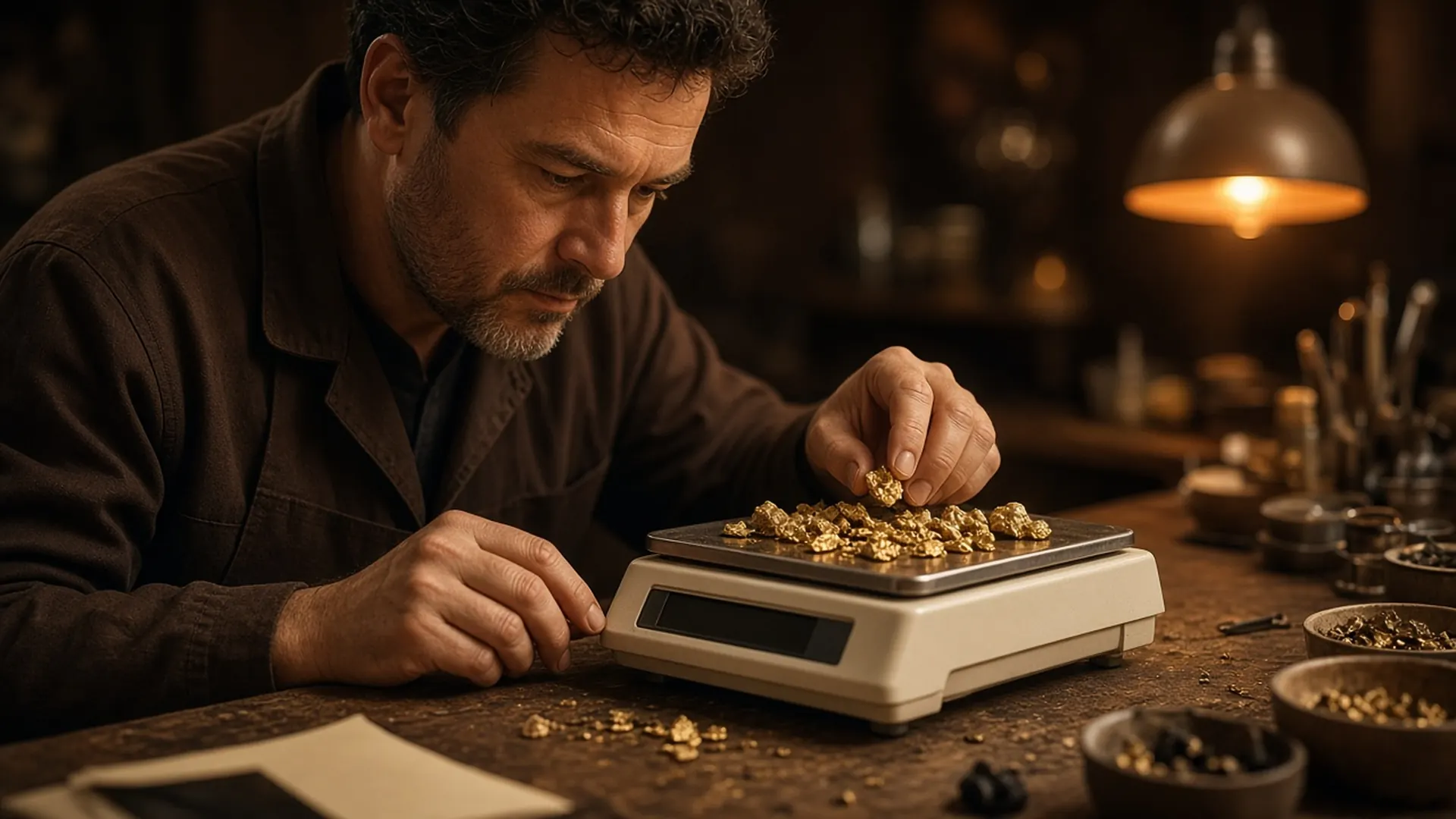
That sting isn’t always a “bad buyer.” Often the tool hid purity, locked you into the wrong unit, or treated melt math like a cash offer. One wrong karat line on mixed lots compounds fast.
Here’s how to pick a scrap gold calculator that shows the math you can recreate on a notepad, flags messy metal, and never pretends an estimate is a settlement.
This guide covers inputs to demand, unit traps, output language that keeps you honest, and a shop checklist before you trust any number on screen.
Demand math you can recreate
A useful scrap gold calculator exposes the same skeleton every serious desk uses:
Estimate ≈ weight × purity × gold price (same unit basis)
If you can’t see weight, purity (karat or millesimal), and the price basis, you’re looking at a quote engine, not a calculator. You should be able to redo the estimate by hand after you learn how to calculate gold value.
Purity has to be explicit. 10K, 14K, 18K, and 22K need stated fractions of fine gold. Stamps like 417, 585, 750, 916, and 999 should be first-class inputs. Keep a gold purity and hallmark chart beside the tool so stamp reading and entry stay aligned.
Checklist: what a scrap gold calculator must do
Run every candidate tool against this list. Skip the pretty UI. Watch the inputs.
Flexible weight units
Spot often quotes per troy ounce. Shop scales show grams. Plenty of U.S. benches still think in pennyweight (DWT).
Your calculator should take grams, DWT, and troy ounces—or convert cleanly. One locked unit is how you mis-key weight when the phone is ringing. Align the shop on pennyweight vs grams vs troy ounce before you standardize SOPs.
Clear purity controls
Look for:
- Karat selectors with stated purity fractions
- Optional millesimal entry for stamped goods
- Room to drop purity when stamps conflict, look worn, or testing says less gold than the mark
Optimistic defaults hide under-plumb stock. Study what “half karat under plumb” means so your inputs match how goods actually mark.
Spot price you can verify or label
Scrap estimates move with gold. The tool should pull a price you can check, or let you type one and mark it as a locked quote or example.
Never train staff on a frozen demo price as if it were today’s market. Label illustrative math when you teach.
Honest output language
Prefer estimate, melt-style value, or theoretical fine gold value. Walk away from interfaces that sound like a guaranteed buy ticket.
Scrap offers, melt math, and consumer resale are three different numbers. If the product blurs them, you’ll argue with customers using the wrong target. Keep scrap vs melt vs resale next to your desk docs.
Support for messy lots
Real trays include mixed karats, stones, and filings. A calculator can’t assay for you, but it should let you:
- Run separate lines by karat
- Strip non-gold weight when you know it
- Treat filings and sweeps as lower-certainty lots
Don’t price shop waste like finished jewelry. Read how to estimate bench filings gold value before you put dust on a buy ticket.
A path into refining terms
After the estimate, you still face accountability, treatment charges, and settlement timing. A tool that never mentions refining context trains false confidence. Pair estimates with accountability vs treatment charge and packing habits from how to get more from scrap gold refining.
Red flags that waste your afternoon
Walk away—or use the tool only as a toy—if you see:
- No purity shown, only a “cash offer” field
- Grams and troy ounces mixed without a conversion step
- Stones left in the weight with no warning
- Gold-filled or plated treated like solid karat
- Settlement language with no assay disclaimer
- One blended karat for a mixed tray
Also distrust tools that never mention packing, lot notes, or that estimates sit above typical buy offers after testing and margin. You’re not hunting fake payout percentages. You’re hunting honesty about process.
Shop workflow that keeps estimates useful
- Sort by karat (and by filled vs solid when you can tell).
- Remove loose stones and obvious non-gold hardware when practical.
- Weigh on a clean, zeroed scale; note unit on the ticket.
- Enter purity from stamp + any test note; drop purity if marks look soft.
- Run the calculator; write the estimate and the spot basis on the lot sheet.
- Compare any buyer offer to melt-style math, not to a wishful number.
- For refining lots, bag by karat, label clearly, and keep a packing list.
That sequence beats arguing about “what the app said” after the fact.
Worked example (illustrative spot)
Suppose you have 28.4 g of stamped 14K chain with no stones. 14K is about 58.3% fine gold.
Fine gold ≈ 28.4 × 0.583 ≈ 16.56 g
If you use an EXAMPLE spot of $2,400 per troy ounce, fine gold per gram ≈ 2400 ÷ 31.1035 ≈ $77.16/g.
Estimate ≈ 16.56 × 77.16 ≈ $1,278 (melt-style, before any buyer margin, stones leftover, or refining fees)
Change the spot, change the estimate. Change purity for under-plumb suspicion, change it again. The calculator’s job is to make those moves visible—not to promise that ticket amount in cash.
Criteria table
| Criterion | Pass | Fail |
|---|---|---|
| Formula visible | Weight × purity × price shown | Black-box “offer” only |
| Units | g / DWT / troy oz (or clear convert) | One unit, silent mix-ups |
| Purity | Karat + millesimal + manual override | Stamp ignored or locked high |
| Language | Estimate / melt-style | Guaranteed payout tone |
| Messy metal | Per-karat lines; filings caution | One blended tray number |
Keep exploring
- Goldcalculator
- scrap gold calculator
- all gold calculators
- how to calculate gold value
- scrap vs melt vs resale
- maximize scrap refining payout
Frequently Asked Questions
Does a scrap gold calculator tell me what a buyer will pay?
No. It estimates theoretical fine-gold value from weight, purity, and price. Offers usually sit below that after testing, risk, and margin. Use the number to compare tickets, not as a settlement promise.
Should I use karat or millesimal stamps in the tool?
Use whichever matches the mark on the piece, then confirm the purity fraction. If you see 585, enter 14K-equivalent purity—or type 585 if the tool accepts millesimal. Worn or conflicting stamps deserve a lower input until you test.
Can I weigh mixed karats as one lot?
You can, but the estimate gets softer. Better: separate by karat, run lines, then sum. Blended trays hide how much 10K is dragging a 18K line—or the reverse.
What about gold-filled and plated jewelry?
Don’t run them as solid karat. Recoverable gold is a thin fraction of total weight. If the calculator has no filled mode, keep those pieces off the solid scrap estimate entirely.
Why does my scale disagree with the buyer’s scale?
Calibration, draft, sticky pans, and unit mix-ups (avoirdupois vs troy) all show up. Zero in front of the customer when you can. Write the unit on every ticket. Small gram errors become real money on thick lots.
Do I need a different tool for refining lots vs walk-in buys?
Same math core. Refining adds packing, accountability, and treatment charges after the estimate. Choose a calculator that stays honest about melt-style value, then read refining terms separately.
How often should I update the spot price in the calculator?
Whenever you price a lot that will settle against today’s market—or lock a quoted price and label it. Stale spot is a common way shops over-promise to sellers.
Next step
Print the pass/fail table, open the calculator you use today, and fail it on purpose: wrong unit, optimistic karat, stones still in. If the tool can’t show those mistakes, switch—or add a notepad check before every ticket. Then walk one real lot through packing and refining terms so the estimate and the settlement story finally match.