Gold Hallmark Numbers Meaning
Gold hallmark numbers meaning for 417, 585, 750, 916, 999 and nearby stamps — how to read them carefully before you weigh scrap or price a jewelry lot.
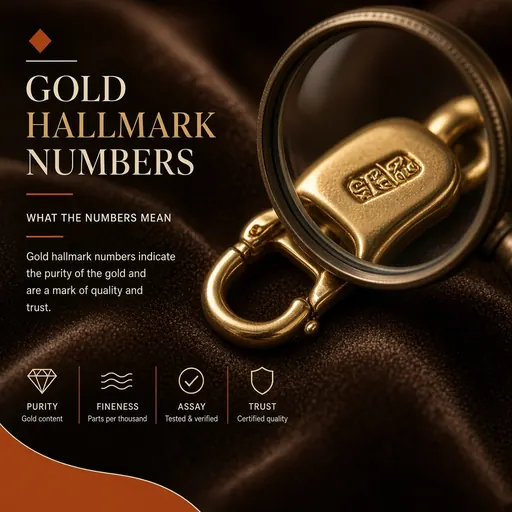
Three digits on a clasp look official. Then you price the lot like 18K, the assay comes back softer, and you realize the stamp you “almost” read was 585—not 750.
Hallmark numbers are not decoration. They’re millesimal purity claims: parts fine gold per thousand. Misread one digit and your melt-style math is fiction.
This guide translates the common stamps you’ll see on scrap, what nearby numbers imply, and when a mark should make you slow down instead of quote fast.
Millesimal marks in plain shop language
A mark like 585 means about 585/1000 fine gold—roughly 58.5%.
750 means about 75%.
999 is near fine gold.
Karat language maps to the same idea (14K ≈ 58.3%, 18K ≈ 75%). Keep both systems straight with the gold purity and hallmark chart, then plug purity into how to calculate gold value.
Common numbers and what they usually mean
| Stamp | Approx. purity | Typical karat talk | Bench note |
|---|---|---|---|
| 375 | ~37.5% | 9K | Don’t upgrade it to 10K on the ticket |
| 417 | ~41.7% | 10K | Common U.S. scrap |
| 583 / 584 / 585 | ~58.3–58.5% | 14K class | 585 is the everyday mark |
| 750 | ~75% | 18K | High melt per gram; confirm stones out |
| 875 | ~87.5% | 21K | Regional; verify carefully |
| 916 / 917 | ~91.6–91.7% | 22K | Soft metal; easy to scratch the mark |
| 990 / 999 | ~99–99.9% | near 24K | Rare as worn jewelry scrap |
You will also see karat letters (10K, 14K, 18K) without digits. Same purity story—different label habit.
How to actually find the number
Loupe the clasp tongue, the ring shank interior, and the bail. Polish compound fills shallow stamps. A wipe with a soft cloth beats guessing from a blurry phone photo.
If digits are half gone, don’t invent a 750. Test or separate the piece. Optimistic stamp reading is how buy desks donate margin.
Numbers that should slow you down
Half-karat and under-plumb style marks. Some goods are intentionally marked below full karat. Don’t force full 14K math because the yellow looks “nice.” Read half karat under plumb.
Filled / plated language near the digits. GF, HGE, “electroplate,” and similar notes mean the millesimal gold claim does not apply to the whole weight.
Conflicting marks. 14K on one part and a different story on a repair shank? Price the uncertain section separately.
No number at all. Unmarked metal is not “probably 14K.” Triage with testing or send as its own refining line.
Using the stamp in scrap math
- Record the exact digits/letters on the lot ticket.
- Convert to purity (585 → ~0.585).
- Weigh in a stated unit (g / DWT / troy oz).
- Multiply by price on the same unit basis.
Unit mix-ups still kill good stamp work—see pennyweight vs grams vs troy ounce.
Remember: stamp → purity input. It does not set the cash offer. Offers and refining wire amounts live downstream of melt-style estimates. Context: scrap vs melt vs resale and accountability vs treatment charge.
Shop example
Chain marked 417, no stones, 40.0 g.
Purity ≈ 0.417.
EXAMPLE spot $2,400 / troy oz ≈ $77.16 / g.
Fine gold ≈ 40.0 × 0.417 = 16.68 g
Estimate ≈ 16.68 × 77.16 ≈ $1,287 (melt-style)
Same weight marked 750 would imply far more fine gold. That’s why squinting at the middle digit matters.
Odd stamps and repair metal
You’ll meet 583, 584, old regional marks, and shank repairs stamped differently from the head. Price the uncertain section on its own line. A repaired ring can be honest 14K on the original shank and mystery solder up top—one bag weight hides that.
Dental scraps and coin scraps sometimes carry composition marks that aren’t jewelry karat slang. Don’t force them into the 417–999 jewelry table without reading the actual mark (or assay path).
Training habits that stick
- Say the digits out loud when you write the ticket (“five-eight-five”).
- Keep a printed chart at the scale—not only on a phone that dies mid-buy.
- Separate trays by stamp family before weighing.
- For dust and filings, stop looking for hallmarks that aren’t there; use bench filings guidance instead.
When you pick calculator software, demand millesimal entry—not karat-only dropdowns. Criteria: how to choose a scrap gold calculator. For lots leaving the shop, packing still decides settlement quality—maximize scrap refining payout.
Staff shortcut that backfires: “yellow = 14.” Break that habit with one week of forced stamp logging. The tickets get messier. The buys get cleaner.
Keep exploring
- Goldcalculator
- gold purity hallmark chart
- gold karat calculator
- 14K gold calculator
- 10K gold calculator
- all gold calculators
Frequently Asked Questions
What does 585 mean on a ring?
About 58.5% fine gold—14K-class jewelry in millesimal form. Use ~0.585 in melt-style math unless testing says the piece is soft for its mark.
Is 750 always 18K jewelry?
750 claims ~75% gold, which matches 18K purity talk. Still check for stones, filled construction, and repairs before you trust the whole weight.
What’s the difference between 916 and 999?
916 ≈ 22K (~91.6% gold). 999 is near fine (~99.9%). Pricing them the same is an expensive habit.
Can hallmark numbers be fake?
Marks can be wrong, worn into ambiguity, or stamped on non-matching repairs. Treat odd results as a cue to test or isolate the piece—not as a personal insult to the seller.
Do I need both karat and millesimal on the ticket?
One clear purity statement is enough if it’s accurate. Writing both (e.g., “14K / 585”) helps anyone who revisits the lot later.
Why do European pieces use three digits more often?
Millesimal marking is common in many markets outside karat-only labeling habits. The metal math is the same; only the label format changes.
Should I melt-test every stamped piece?
Not every small buy. For large lots, odd stamps, or high-value unmarked metal, testing or assay beats stamp faith. Match the effort to the risk.
Next step
Pull five pieces from the scrap drawer. Loupe each mark, write the exact digits on paper, convert to purity, and run melt-style math once. Anything you can’t read cleanly gets its own bag—no “close enough” upgrades.