Pennyweight vs Grams
Pennyweight vs grams vs troy ounce for gold scrap: the conversions shops use, when each unit shows up, and unit mistakes that wreck melt estimates.
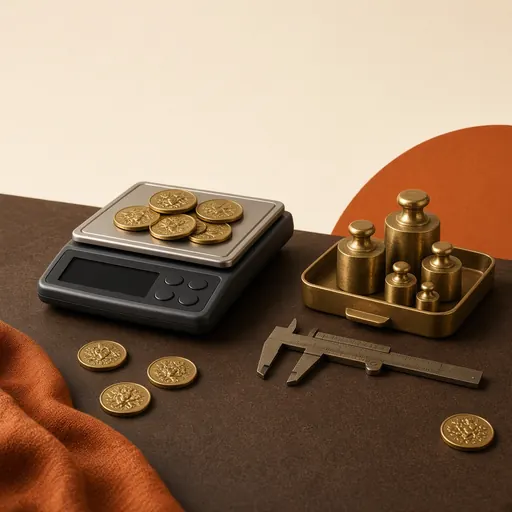
Your scale says 12.50. Your buyer says eight DWT. Spot is per troy ounce. Nobody wrote the unit on the ticket—and now the argument is about “honesty,” not arithmetic.
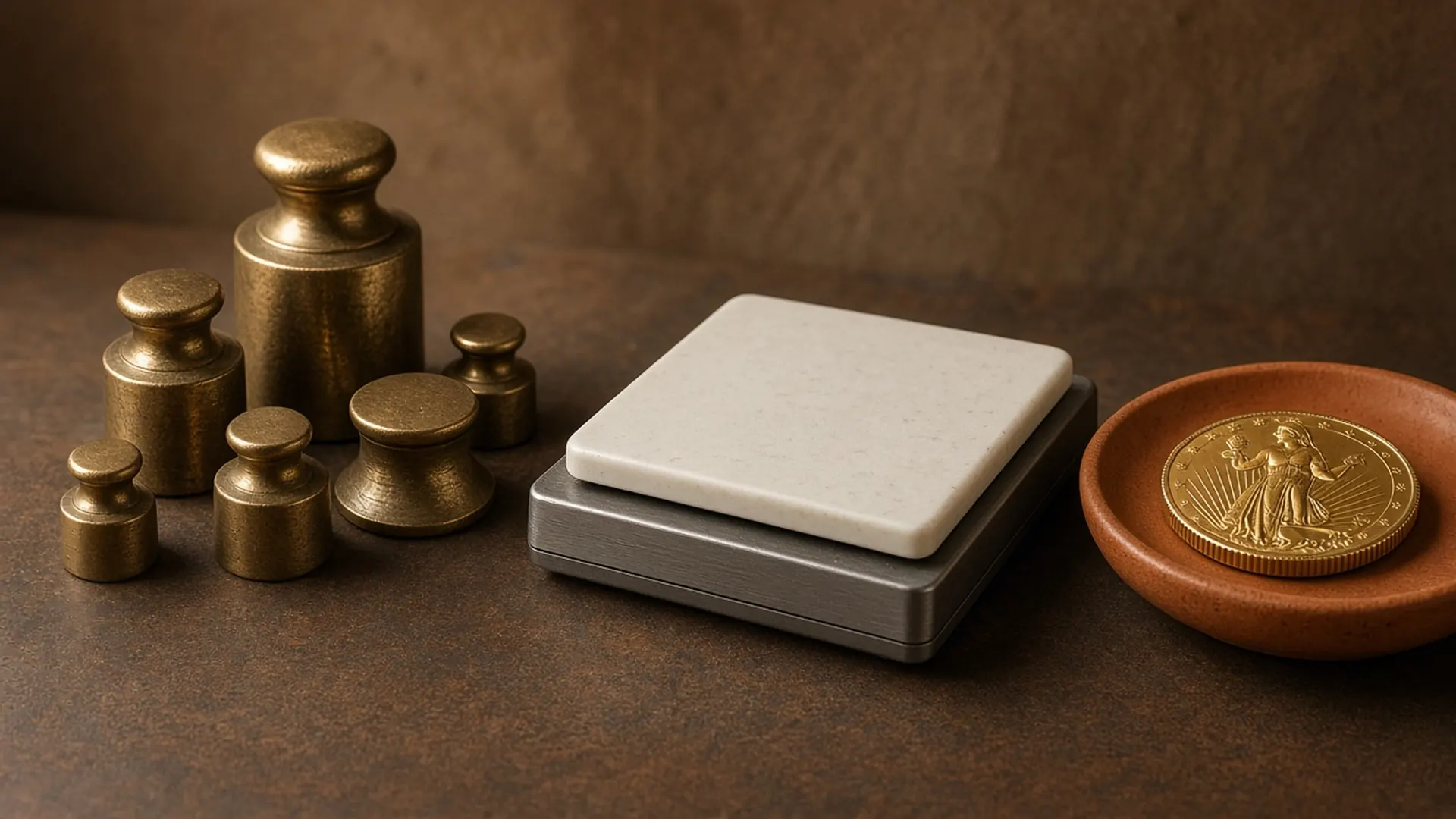
Gold trade runs on three common weight languages. Mix them without converting and the purity math never had a chance.
Here’s how pennyweight (DWT), grams, and troy ounces relate, when each shows up on the bench, and how to stop unit collisions before they hit the settlement.
The conversions you’ll actually use
Memorize these; tape them to the scale if you have to:
| Unit | Equals |
|---|---|
| 1 troy ounce | 31.1035 grams |
| 1 troy ounce | 20 DWT |
| 1 DWT | 1/20 troy ounce ≈ 1.55517 grams |
| 1 gram | ≈ 0.64301 DWT |
| 1 gram | ≈ 0.03215 troy ounce |
Avoirdupois ounces (kitchen/postal scale ounces) are not troy ounces. If a “postal scale” is in the story, stop and fix the tool.
Where each unit shows up
Grams — common on jewelry scales worldwide; easy decimal weighs; friendly for small pieces and filings.
Pennyweight (DWT) — still alive in many U.S. jewelry and scrap conversations; quick mental math with 20 DWT per troy ounce.
Troy ounce — how gold prices are usually quoted; the bridge between spot and shop weight.
You don’t need a favorite. You need a stated unit on every ticket. Then convert before you multiply by spot.
Plug units into gold value math
Formula reminder: estimate ≈ weight × purity × price (same unit basis). Full walkthrough: how to calculate gold value.
If EXAMPLE spot = $2,400 / troy oz:
- Per gram ≈ 2400 ÷ 31.1035 ≈ $77.16 / g
- Per DWT ≈ 2400 ÷ 20 = $120.00 / DWT
Never multiply a gram weight by a per-DWT pure-gold price. That’s how “math” invents money.
Worked examples
Grams → melt-style estimate
25.0 g of 18K (~0.750).
Fine gold ≈ 25 × 0.750 = 18.75 g
Estimate ≈ 18.75 × 77.16 ≈ $1,447 (illustrative spot)
DWT → same idea
16.0 DWT of 14K (~0.583).
Fine gold ≈ 16 × 0.583 ≈ 9.33 DWT
Estimate ≈ 9.33 × 120 ≈ $1,120 (illustrative spot)
Convert DWT to grams when your scale only speaks grams
16.0 DWT × 1.55517 ≈ 24.88 g. Now you can work entirely in grams if the desk prefers it.
Unit mistakes that create fake disputes
Writing a number without a unit. “12.4” is not a weight. “12.4 g” is.
Assuming ounce means troy. Jewelry scrap ounces are troy in trade talk; kitchen scales often aren’t.
Blending bag weights across units on one packing list. Pick one system for the shipment—see packing discipline in how to get more from scrap gold refining.
Using troy math on filings without noting contamination. Unit accuracy won’t fix dirty sweeps—bench filings gold value.
Purity still rides along
Correct units with wrong karat still fail. Keep stamps straight with the gold purity hallmark chart and hallmark numbers meaning. Soft marks: half karat under plumb.
And remember which number you’re building—melt-style vs scrap offer vs resale: scrap vs melt vs resale. Refining settlements add fee terms on top: accountability vs treatment charge.
Staff drill that catches unit bugs
Hand a new hire three tickets with the same metal story written three ways: grams, DWT, and troy ounces. Ask for melt-style estimates using one EXAMPLE spot. If the three answers don’t match within rounding, the conversion step failed—not the gold.
Keep a cheap printout of 31.1035 and “20 DWT = 1 troy oz” inside the scale drawer. Phones die. Stickers don’t.
When sellers bring their own weight
Sellers sometimes arrive with a number from a kitchen scale or a phone app. Smile, then reweigh. Ask what unit their number used. If they don’t know, their number is a conversation starter—not a ticket input.
Same rule on buy-outs from other shops: trust your scale and your unit label.
Calculator checklist for units
A scrap calculator should accept g, DWT, and troy oz—or convert in plain sight. If it silently assumes one unit, staff will mis-key under pressure. Criteria: how to choose a scrap gold calculator.
Quick reference card
- Write the unit every time.
- Convert to the price basis before multiplying.
- Keep 31.1035 and 20 DWT/oz on a sticker near the scale.
- Separate kitchen-scale ounces from troy talk.
- Use one unit language on refining packing lists.
Keep exploring
- Goldcalculator
- gold pennyweight calculator
- gold gram calculator
- gold ounce calculator
- how to calculate gold value
- all gold calculators
Frequently Asked Questions
Is a pennyweight the same as a gram?
No. 1 DWT ≈ 1.555 g. Treating them as equal overstates weight in grams—or understates it the other way.
Why do gold prices use troy ounces?
Trade convention. Spot markets quote precious metals in troy ounces. Shop scales can still weigh grams; you convert.
How many grams are in a troy ounce?
31.1035 g. Not 28.35 g (that’s a common avoirdupois ounce figure people mix in by mistake).
Should my shop standardize on grams or DWT?
Either works if everyone converts cleanly. Many shops weigh in grams and convert for DWT conversations—or the reverse. Pick a house standard and train it.
Do troy ounces and avoirdupois ounces ever match?
No. Different systems. If a seller used a food scale, reweigh on a jewelry scale before you price.
Can unit errors explain a refining settlement gap?
Sometimes—especially if your list and their receiving report used different units without conversion. Start reconciling with units and bag counts, then purity.
What’s the fastest mental check for DWT to grams?
Roughly ×1.55. For tickets that matter, use 1.55517 and a calculator—not vibes.
Next step
Put a unit sticker on the scale today: “g / DWT / troy oz — write one.” Reweigh one old lot sheet that only has a naked number, convert it properly, and see whether your past estimate still holds.