Bench Filings Gold Value
Bench filings gold value for mixed jewelry scrap: how refiners estimate filings, why averages undervalue sorted karat, and how to prep a filing lot.
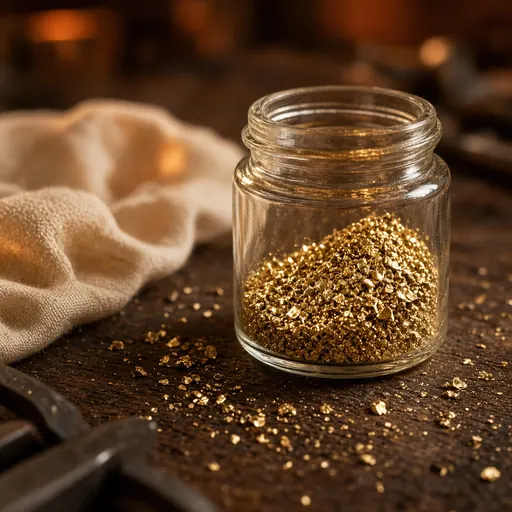
Bench filings look like free money until you weigh a jar of carpet dust, solder bits, and abrasive and call it “14K.”
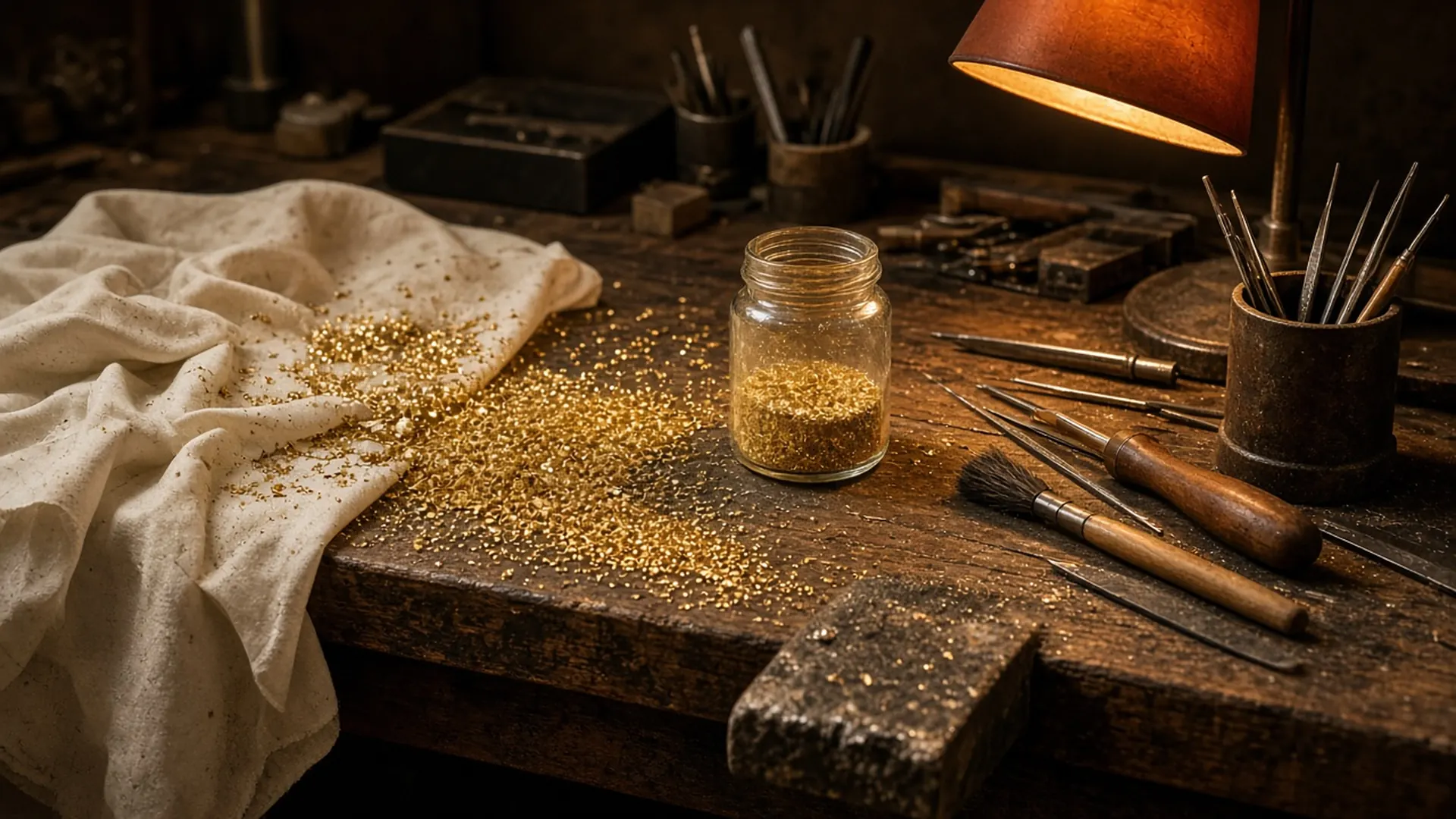
Sweeps are real gold-bearing scrap. They’re also contaminated by design. If you price them like cut chain, you’ll either shock yourself at settlement or cheat the shop that produced them.
Here’s a practical way to estimate filings value, pack them, and keep melt-style math honest.
What filings actually are
Filings, sweeps, polishing dirt, and floor catch mixes can include:
- Gold of mixed karats from weeks of jobs
- Solder and other metals
- Abrasive, rouge, plaster, hair, carpet fiber
- Tiny stones and steel splinters
There is rarely a trustworthy hallmark on dust. Charts still help when you separate recognizable pieces first—gold purity hallmark chart—but the jar itself is a blend story.
Estimate ≠ jewelry scrap math on autopilot
Core formula stays the same: weight × purity × price on one unit basis (how to calculate gold value).
The purity input is the weak link. You don’t get a clean 0.583 because the bench “mostly does 14K.”
Practical approaches shops use:
- Conservative purity based on known work mix (and written down)
- Separate streams (yellow filings vs white, known 18K jobs vs mystery sweeps)
- Defer to refining assay for large jars instead of theatrical precision
Label every estimate as soft. Filings sit closer to refining settlement reality than to walk-in jewelry buys—see scrap vs melt vs resale and accountability vs treatment charge.
Weighing and unit discipline
Use a clean container. Tare it. Write grams or DWT explicitly. Unit mix-ups still happen on jars—pennyweight vs grams vs troy ounce.
Don’t wet the sweeps to “settle” them before a sale weigh unless your process standard says so and both sides agree. Moisture is drama.
Packing filings so they don’t migrate
- Double-bag; tape the fold shut.
- Label FILINGS / SWEEPS – contaminated / mixed.
- Keep filings out of solid karat jewelry bags.
- Include jar count and gross weights on the packing list.
Packing detail pays off in refining disputes—how to get more from scrap gold refining.
Purity guesses without lying to yourself
| Stream | Healthier habit | Risky habit |
|---|---|---|
| Known 18K bench week, clean catch | Note “18K-majority filings”; still discount for solder/dirt | Book full 0.750 on the whole jar |
| Mixed repair bench | Lower purity; or ship as assay lot | Average to “14K” because that’s the vibe |
| Polishing sweeps | Expect heavy non-gold; conservative estimate | Price like filings from a pure file stroke |
| Floor sweeps | Lowest confidence; often assay path | Same purity as jewelry tray |
Under-plumb jewelry in the same shop doesn’t magically become plumb when it turns into dust—half karat under plumb. Digit stamps on stray findings still get read with hallmark numbers before they hit the jar story.
Worked example (illustrative, soft)
Jar of mixed yellow filings: 100.0 g gross.
You believe a conservative fine-gold fraction around 0.40 after dirt/solder (example assumption—not a universal rule).
EXAMPLE spot ≈ $77.16 / g pure.
Implied fine gold ≈ 100 × 0.40 = 40 g
Soft estimate ≈ 40 × 77.16 ≈ $3,086 melt-style theory
If you had fantasized 0.583 on the same dirty 100 g, you’d invent a much larger number—and train someone to expect it. Don’t.
When the jar is valuable enough, stop squeezing precision out of a purity guess and send it for refining terms you understand.
Shop habits that keep filings from walking away
- Empty bench pans into a labeled jar at close—not “when it looks full.”
- Keep a magnet pass for obvious steel junk before you seal a shipment bag.
- Don’t combine polishing room dirt with clean file strokes if volumes allow two jars.
- Train apprentices that floor sweeps are not the same product as bench-lip filings.
Gold leaves on rags and shoes quietly. A boring collection ritual beats a heroic annual clean-out.
Calculator use for filings
Pick tools that allow manual purity and honest “estimate” language. Locked jewelry karat presets are a trap for sweeps—how to choose a scrap gold calculator.
Run filings as their own line. Never blend them into a 14K chain ticket to “make the average look fine.”
If two partners disagree on the purity guess, write both numbers and ship for assay on big jars instead of splitting the difference in silence.
Keep exploring
- Goldcalculator
- scrap gold calculator
- dental gold calculator
- maximize scrap refining payout
- how to calculate gold value
- all gold calculators
Frequently Asked Questions
Are bench filings worth selling?
Usually yes if the shop produces real gold work. Value depends on contamination and karat mix. Empty the jar on a schedule so it doesn’t become a forgotten coffee can.
Can I acid-test filings like a ring?
Messy and often misleading on mixed dust. Triage recognizable chunks; treat the bulk as a refining stream.
Should white and yellow filings share one bag?
Separate when you can. Mixed color sweeps make purity stories even softer.
Why do refining settlements on sweeps surprise shops?
Because shop purity guesses were optimistic, packing was sloppy, or melt-style estimates were treated like net wires. Compare terms and lists—not vibes.
How often should I collect sweeps?
Often enough that gold isn’t walking out on shoes and rags—and before the jar becomes a science experiment. Set a weekly or monthly habit that fits volume.
Do polishing compounds destroy gold value?
They add mass that isn’t gold and complicate processing. That’s contamination, not “the gold disappeared.” Conservative purity and clear labels beat denial.
Is there a standard purity % for all bench filings?
No. Anyone selling a universal filings purity number is guessing for you. Use your work mix, separate streams, and assay on big lots.
Next step
Label today’s jar with date, bench, and “mixed/contaminated.” Weigh it, enter a conservative purity in writing, and file that soft estimate separately from jewelry scrap. If the number is large, pack it for refining with a proper list instead of arguing with a fantasy karat.