Scrap Gold vs Melt Value
Scrap gold vs melt value vs resale price: what each number means, why cash offers sit under melt, and when intact jewelry can beat scrap math.
A seller hears “melt value,” a buyer quotes “scrap,” and a retail tag still shows last year’s resale dream. Three numbers. One bag of metal. Endless arguments.
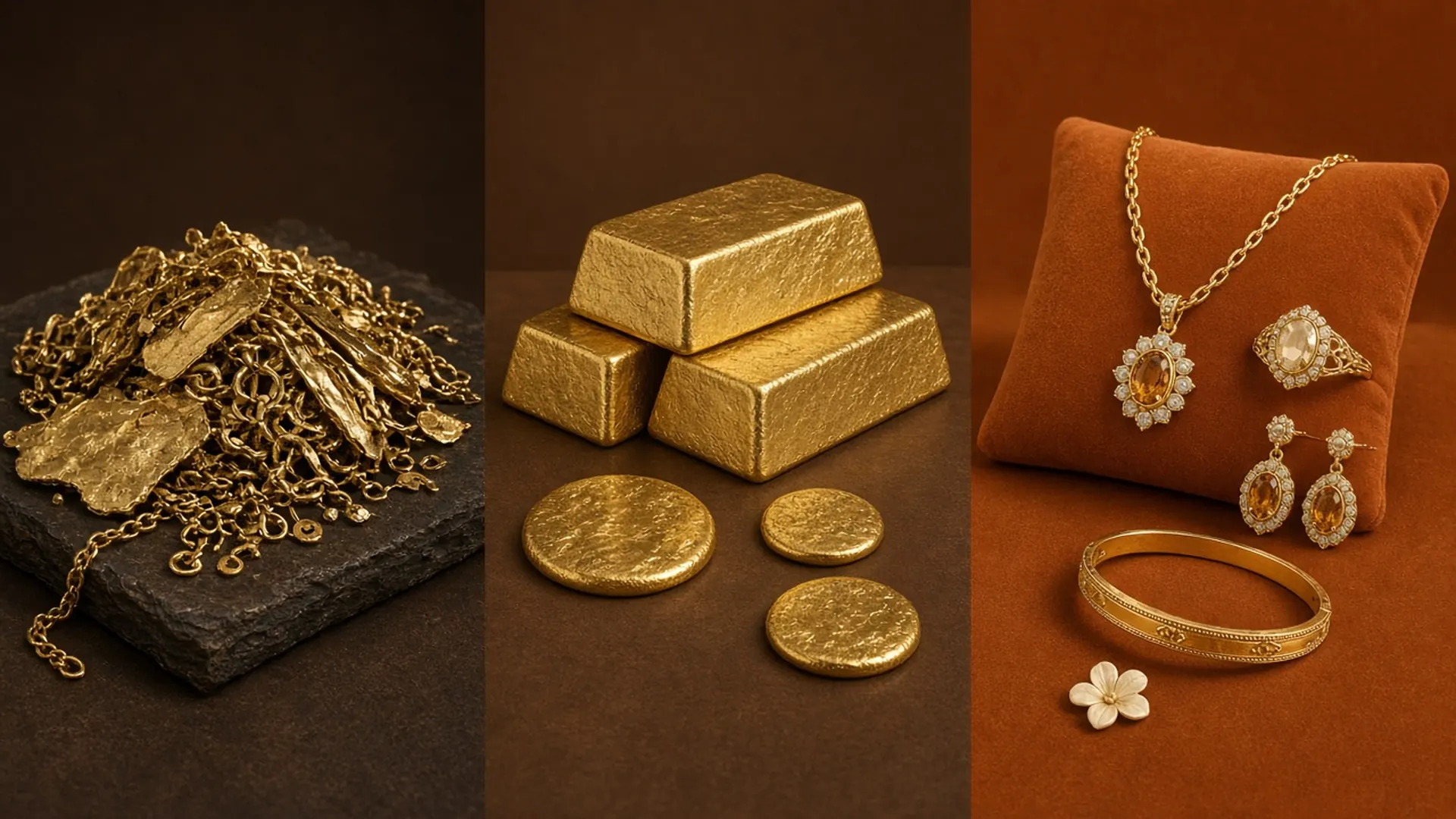
If you blur those words on the ticket, someone leaves mad—and it might be you after the lot settles soft.
This piece separates scrap offers, melt-style math, and consumer resale so you know which figure belongs on which conversation.
Three numbers, three jobs
Melt-style value — theoretical fine-gold content × gold price (same unit basis). It’s the clean math from weight and purity. How to run it: how to calculate gold value.
Scrap / buy offer — what a desk will pay you (or what you’ll pay a walk-in) after testing risk, overhead, and margin. Usually sits below full melt-style value. Not a secret “percentage rule” you should invent—just expect a gap.
Resale / retail price — what a finished piece might sell for as jewelry to a consumer. Design, brandable look, stones, and local demand drive it. Scrap math is the wrong tool for that conversation.
Keep a calculator that labels estimates honestly. Selection criteria: how to choose a scrap gold calculator.
Why melt and scrap diverge
Melt-style math assumes you know weight and purity. Real buys include:
- Stones and steel still in the weigh-in
- Soft stamps and under-plumb goods (half karat under plumb)
- Mixed karat trays priced as one fantasy average
- Time, testing supplies, and the chance the lot assays worse than the marks
Buyers price that risk. You’re not owed melt on every ticket. You’re owed a clear explanation of which number you’re debating.
Where resale sits (and when it wins)
A clean 18K designer ring with a desirable look can sell above scrap—and sometimes above melt-style fine-gold math—because a buyer wants the object, not the metal.
Broken chains, mismatched earrings, and fashion pieces with thin gold often do better as scrap. Don’t force a retail fantasy onto dead inventory just because melt looked high on a spreadsheet.
Rule of thumb for the desk: if it won’t sell as jewelry in a reasonable window, run scrap/melt math. If it will, price the object—not only the ounces.
Side-by-side comparison
| Figure | Based on | Best use | Common mistake |
|---|---|---|---|
| Melt-style value | Weight × purity × spot | Sanity-check offers; train staff | Calling it a guaranteed payout |
| Scrap / buy offer | Melt math + risk + margin | Cash deals, trade-ins | Ignoring stones / wrong karat |
| Resale / retail | Design, demand, stones | Selling wearable jewelry | Using scrap math to set retail tags |
Purity inputs still start with stamps—use the gold purity hallmark chart and hallmark numbers guide.
Desk script that prevents fights
- Weigh and note unit (see pennyweight vs grams vs troy ounce).
- State purity from mark + any test note.
- Show melt-style estimate and call it an estimate.
- Present the scrap offer as a separate number.
- If the piece is wearable, discuss resale as a third path—not a “gotcha” after the fact.
Write all three on the worksheet when the customer is emotional. Paper calms the room.
Refining changes the ending
When metal leaves for a refiner, melt-style math meets accountability, treatment charges, and settlement timing. The wire is not “the calculator number.” Read accountability vs treatment charge and packing habits in how to get more from scrap gold refining.
Filings and sweeps are their own soft category—contamination makes melt-style estimates shaky. See bench filings gold value.
Worked contrast (illustrative)
20.0 g stamped 14K (~58.3%), stones removed.
EXAMPLE spot $2,400 / troy oz ≈ $77.16 / g.
Fine gold ≈ 20 × 0.583 = 11.66 g
Melt-style estimate ≈ 11.66 × 77.16 ≈ $900
A scrap offer might come in lower after testing and margin—that gap is normal process, not proof the formula failed.
If the same ring were a hot retail SKU with a good stone, a consumer resale ask could sit well above either metal figure. Different market.
Keep exploring
- Goldcalculator
- scrap gold calculator
- gold melt calculator
- cash for gold calculator
- gold jewelry calculator
- all gold calculators
Frequently Asked Questions
Is melt value the same as spot times weight?
Only for pure gold on the same unit basis. Jewelry needs a purity factor. Skipping karat is how people invent fantasy tickets.
Why won’t buyers pay full melt?
They carry testing risk, overhead, and profit. Soft lots and mixed trays widen the gap. Ask for the offer logic; don’t invent a universal payout percent.
Should I show customers the melt-style number?
If you do, label it clearly as theoretical fine-gold value—not a promise. Many desks show both melt-style math and the cash offer side by side.
When should I choose resale over scrap?
When the piece is wearable, in demand, and likely to sell before it ties up cash. Broken, outdated, or thin gold usually belongs on the scrap path.
Do refiners pay melt value?
Refiners settle on assayed metal minus their terms (accountability, treatment, and related charges). Packing and lot notes affect how clean that path feels.
Can scrap ever exceed melt-style math?
Rare for plain broken jewelry. More plausible when someone is buying for repair stock or a specific finding—not for melt. Don’t budget on exceptions.
How do gold-filled pieces fit these three numbers?
Poorly on melt and scrap if you treat them as solid karat. Recoverable gold is a fraction of total weight. Resale depends on whether anyone wants the object as-is.
Next step
On your next buy, write three lines on the ticket: melt-style estimate, scrap offer, and “resale? yes/no.” If you can’t fill those lines without guessing purity or unit, stop and fix the weigh-in before you argue about “what gold is worth.”